ESG Report
Year 2024【English Version】

ESG Report
Year 2024【English Version】
Specific Plans:
Implementation Results:
Specific Plans:
Implementation Results:
Specific Plans:
Implementation Results:
I. Information Security Risk Management Framework
The Company has established an information security risk management framework, centrally planned and coordinated by the Information Technology (IT) Department, with the Audit Office conducting periodic information security audits. The head of the IT Department regularly reports the status of information security implementation and risk conditions to the General Manager and/or the Board of Directors, ensuring effective management oversight and adequate resource support.
II. Information Security Policies
In accordance with the internal control system, the Company has formulated the Computerized Information Systems Control Procedures and the Information Security Management Policy. These policies clearly define standards for information access control, system development and maintenance, and data backup and recovery, thereby ensuring the confidentiality, integrity, and availability of information assets.
III. Specific Management Measures and Technical Safeguards
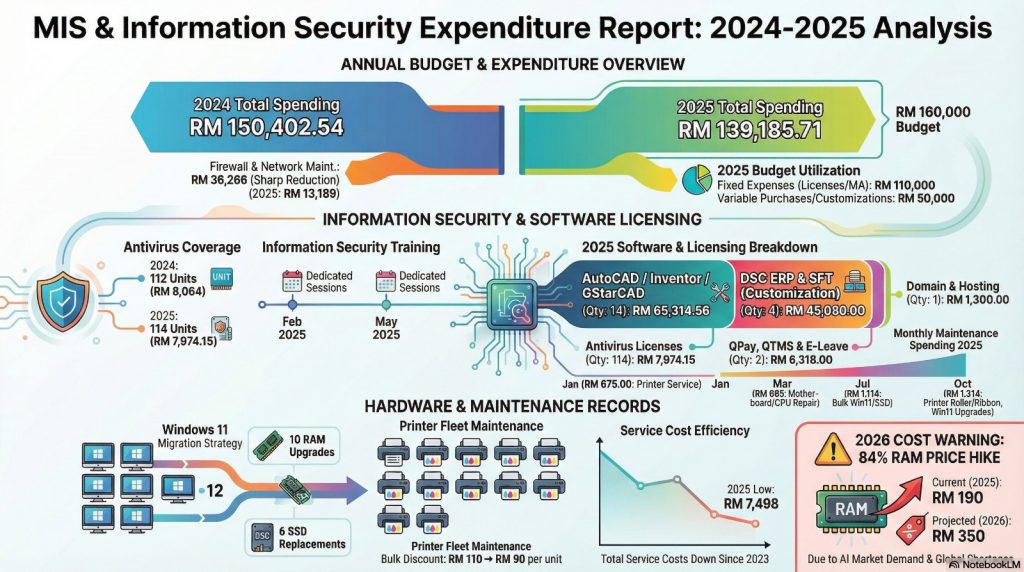
IV. Resources and Training
V. Disclosure and Implementation Results
As of the end of 2024 and 2025, the Company has maintained a compliance record of “zero major information security incidents.” The above policies, management framework, and implementation status have been fully disclosed in the Company’s 2024 Annual Report (Information Security Risk Management Framework, Information Security Policies, Specific Management Measures, and Resources Invested in Information Security Management) and on the Company’s official website under the “ESG Section.”
The Company firmly believes that employees are its most valuable asset and is committed to providing comprehensive and continuous training and development opportunities to help employees respond to market trends, continuously enhance their skills, and broaden their knowledge horizons. Through well-structured education and training programs, the Company supports employees in realizing their potential and improving performance in positions that best match their abilities.
In accordance with regulations, the Company contributes 1% of employees’ monthly wages to the Human Resource Development Fund (HRDF, now renamed HRD Corp), actively supporting government initiatives for talent development. HRD Corp is administered by the Ministry of Human Resources (MOHR) of Malaysia and operates under the Human Resource Development Fund Act 2001 (PSMB Act). Through levy and grant mechanisms, it promotes workforce skill enhancement and employment competitiveness, thereby supporting Malaysia’s economic transformation and sustainable development.
The Company will continue to strengthen employees’ digital skills, environmental awareness, and cross-cultural communication capabilities to adapt to a rapidly changing market environment and ensure the team’s competitive advantage. Through continuous learning and growth, the Company not only enhances its sustainability and resilience but also provides employees with a forward-looking career development platform, achieving a shared vision of mutual growth and prosperity for both individuals and the Company.
Employee Training and Development Programs and Implementation Status in 2024
The Company conducts employee satisfaction surveys on a regular basis and discloses the implementation status and specific improvement plans on the Company’s official website and in its sustainability report.
I. Survey Execution
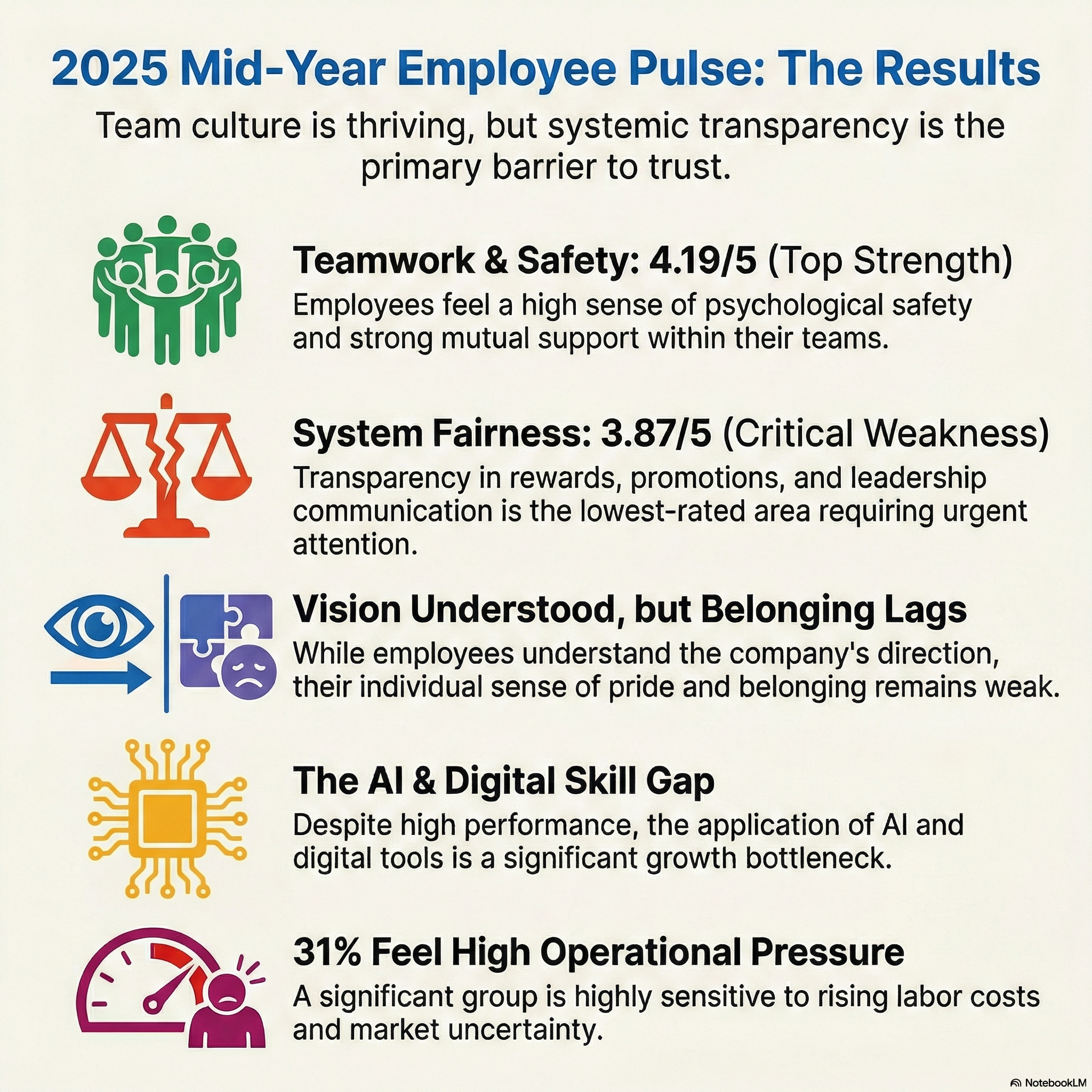
The Company adopts a semi-annual survey mechanism. The most recent survey was conducted in July 2025, with a total of 124 employees participating. The survey utilized a red–yellow–green dashboard to analyze four key dimensions. The results indicated that “Team Interaction” performed strongly, with a score of 4.19, while “Systems and Leadership Perception” showed room for improvement, with a score of 3.87.
II. Improvement Actions
In response to employee feedback highlighting concerns over “rigid systems” and “fairness” in the survey, the Company’s ESG Committee and management promptly announced specific improvement actions in September 2025:
The issue of carbon neutrality, which has emerged in response to global climate change, has become an international consensus and a potential risk under new and upcoming environmental regulations. Various industries have begun implementing measures to address climate change. In recent years, the United Nations has actively promoted the SDGs, and a majority of global manufacturers have responded by striving to reduce pollution, protect the environment, improve energy efficiency, utilize resources effectively, and minimize waste — all in pursuit of sustainable corporate development. Our company proactively advocates compliance with environmental regulations and adopts energy saving and carbon reduction as a core business principle. We emphasize both environmental protection and economic value, aiming to minimize environmental impact, fulfill social responsibility, and coexist harmoniously with the planet.
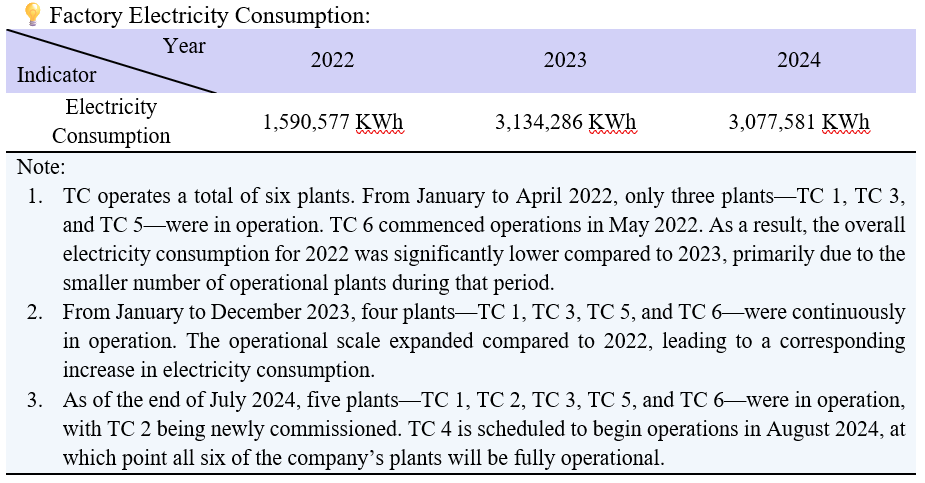
Upholding the concept of sustainable operations, our company actively promotes various policies to improve energy efficiency, reduce energy consumption, and lower carbon emissions. We also strengthen employee awareness of energy conservation to fulfill our commitment to environmental protection. In recent years, the following measures have been progressively implemented in our operational sites and daily management:
| Energy-Saving and Carbon Reduction Measures | Method |
| Digitalization of Administrative Processes | Fully implemented the Online e-Leave System to effectively reduce the use of paper documents, improve administrative efficiency, and lower the consumption of office supplies. |
| Introduction of Energy-Efficient Equipment | Replaced factory perimeter lighting and surveillance systems with solar-powered spotlights and CCTV cameras, achieving both energy efficiency and enhanced nighttime security. |
| Optimization of Vehicle Management | Phased out work vehicles that have been in use for over 15 years, prioritizing replacement with hybrid vehicles to reduce fuel consumption and carbon emissions, while simultaneously improving operational efficiency. |
| Daily Energy-Saving Actions | Promoted good habits such as turning off lights when not in use, setting air conditioning to reasonable temperatures, and reducing paper printing through double-sided printing and paper recycling. Regular internal awareness campaigns are conducted to deepen the company’s culture of energy conservation and carbon reduction. |
In the future, our company will continue to review current energy usage and evaluate more forward-looking energy-saving strategies. By integrating emerging technologies and encouraging employee participation, we aim to further enhance energy management performance and move toward the goal of low-carbon and sustainable operations.